
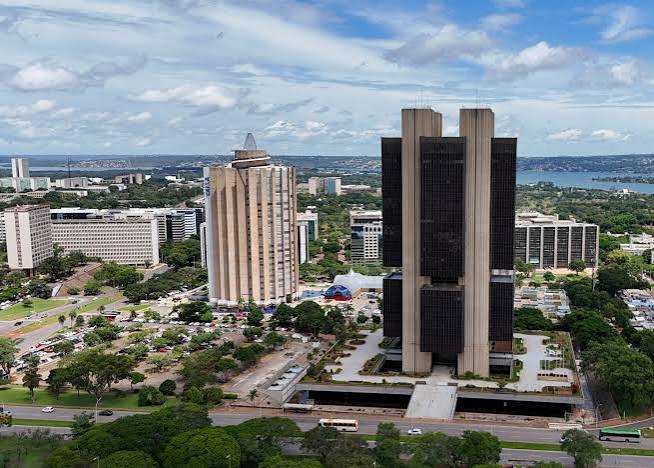
A Fifth Straight Cut for Brazil
Brazil’s monetary policy committee, known as Copom, has voted to lower the country’s benchmark Selic interest rate by 0.25 percentage points, bringing it down to 13.75 percent per year. The decision, made at the committee’s mid-September meeting, extends an easing cycle that has now run for five consecutive meetings, signaling a sustained shift in the central bank’s approach even as inflation expectations remain elevated by historical standards.
The rate cut arrives against a backdrop very different from what many developed economies are currently experiencing. While the U.S. Federal Reserve and other major central banks have recently moved toward raising rates to combat inflation pressure tied largely to energy costs, Brazil’s policymakers are moving in the opposite direction, prioritizing support for economic growth even as inflation expectations hover near five percent, above the central bank’s preferred target range.
Why Brazil Is Cutting While Others Hike
This divergence highlights one of the defining features of the current global monetary policy landscape: different economies are contending with different combinations of inflation, growth and structural pressures, leading central banks down markedly different paths. For Brazil, a lengthy period of historically high interest rates aimed at taming inflation in prior years appears to have created room for policymakers to begin unwinding some of that tightness, provided inflation continues moving in a manageable direction.
The minutes from the Copom meeting, published shortly after the decision, are expected to reveal significant internal debate among committee members regarding just how far the easing cycle can safely continue. With inflation expectations still running close to five percent, the central bank faces a delicate balancing act: cut too aggressively, and inflation risks reaccelerating; cut too cautiously, and the domestic economy could face unnecessary drag from borrowing costs that remain restrictive relative to actual price pressures.
What the Selic Rate Affects
The Selic rate functions as the foundation for borrowing costs throughout the Brazilian economy, influencing everything from bank lending margins and mortgage costs to government bond yields and the value of the Brazilian real on currency markets. Changes to the rate ripple outward into virtually every corner of Brazil’s financial system, making Copom’s decisions closely watched not just by domestic investors, but by international funds with exposure to Latin American markets.
Lower borrowing costs are generally viewed as supportive for equities listed on Brazil’s B3 exchange, as cheaper financing can boost corporate earnings and make riskier assets more attractive relative to fixed-income alternatives. At the same time, a lower Selic rate typically puts some downward pressure on the Brazilian real, since narrower interest rate differentials with other major currencies can reduce the appeal of Brazilian assets to foreign capital seeking yield.
Corporate Backdrop Amid the Rate Decision
The rate decision landed during a relatively quiet stretch for corporate news in Brazil, with no major earnings reports or dividend events scheduled around the announcement, leaving the Copom minutes as the dominant story for domestic financial markets this week. Still, corporate developments continue to unfold in the background. State-run energy giant Petrobras has ten exploration blocks awaiting licensing approval in partnership with ExxonMobil in the Foz do Amazonas basin, part of the company’s broader push to expand reserves along Brazil’s Equatorial Margin.
Elsewhere, meat processing giant JBS has petitioned Brazil’s securities regulator regarding a corporate restructuring matter, one of several ongoing corporate governance developments that continue to draw attention from investors tracking Brazil’s largest listed companies.
A Broader Emerging Markets Signal
Brazil’s continued easing cycle offers a useful data point for understanding how emerging market economies are navigating a global environment shaped by geopolitical volatility, fluctuating energy prices, and diverging monetary policy paths among major central banks. Unlike Fed policymakers, who cited persistent inflation as justification for a rate hike, Brazil’s central bank appears to be reading its own domestic conditions as supportive of continued easing, at least for now.
That divergence carries real consequences for global capital flows. As developed-market interest rates rise, some investors may find emerging market assets comparatively less attractive from a pure yield perspective, even as those same markets offer growth potential that developed economies increasingly struggle to match. How Brazil balances this dynamic in the months ahead, particularly if global energy prices remain volatile, will likely shape investor sentiment toward Latin American assets heading into 2027.
Looking Ahead
With inflation expectations still elevated and the easing cycle now five cuts deep, attention will turn to whether Copom opts to continue trimming rates at its next scheduled meeting or pauses to assess the cumulative effect of its recent decisions. For now, Brazil stands as a notable outlier among major economies actively cutting rates while much of the developed world moves in the opposite direction.
