
Summary
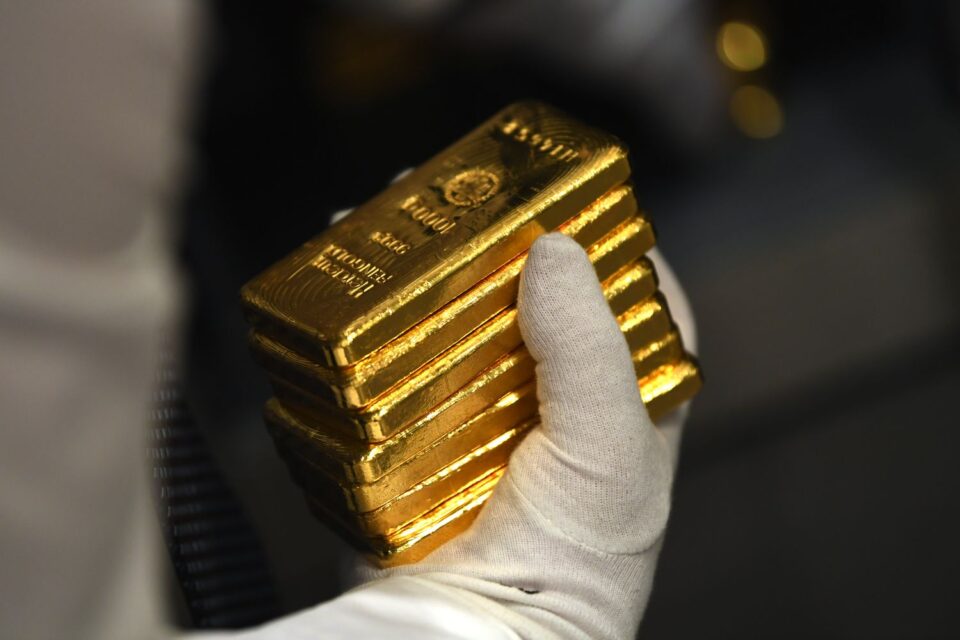
Gold prices remain near record levels, trading close to $4,400 an ounce, as investors balance expectations of a Federal Reserve rate move against persistent inflation, elevated oil prices and continued central bank buying led by China. The metal remains up more than 20% over the past year even after pulling back slightly from recent highs.
Gold Stays Elevated as Markets Search for Direction
Gold prices are holding near record territory as investors weigh a shifting mix of signals heading into the Federal Reserve’s next policy decision. The precious metal, which has traded in a range close to 4,500 an ounce in recent sessions, remains up more than 20% over the past year, extending one of the strongest multi-year rallies gold has seen in decades even as it has pulled back modestly from its most recent peaks.
The metal’s resilience reflects a familiar dynamic: gold tends to attract demand when investors are uncertain about the direction of interest rates, inflation and geopolitical risk simultaneously, and all three of those pressures are currently in play at once.
Inflation and Interest Rate Bets Remain in Focus
Much of the recent price action has centered on speculation over the Federal Reserve’s next move. Traders have been closely parsing recent labor market data and commentary from Fed officials for clues about whether the central bank will hold rates steady or move higher in response to persistent inflation pressure. Stronger-than-expected jobs data in the United States has fed expectations that the Fed could lean toward tightening policy further, a scenario that typically puts downward pressure on gold since higher rates increase the appeal of interest-bearing assets relative to non-yielding metal.
At the same time, inflation has not fully cooled. Data from the eurozone showed inflation accelerating in recent months, driven in large part by rising energy costs, reinforcing the view among many investors that price pressures remain a live concern across major economies, not just in the United States. That backdrop has kept gold’s traditional role as an inflation hedge firmly in play, even as rate expectations create competing crosscurrents.
Geopolitical Tension Adds Another Layer
Beyond monetary policy, renewed military tension involving Iran and disruptions affecting shipping routes near the Strait of Hormuz have added a geopolitical risk premium to commodity markets broadly. Oil prices have climbed toward multi-month highs amid the tension, and that volatility has spilled over into gold, which investors frequently turn to during periods of heightened uncertainty as a store of value outside the traditional financial system.
The combination of an unsettled geopolitical backdrop and uncertain monetary policy has created what analysts describe as a uniquely supportive environment for gold, even as the metal’s rapid rise raises questions about how much further it can climb without a meaningful pullback.
Central Banks Keep Buying
One of the more structural forces underpinning gold’s rally has been sustained buying from central banks, particularly China’s. The People’s Bank of China has extended its gold-buying streak for 22 consecutive months, according to recent data, lifting its official holdings to more than 76 million fine troy ounces. That steady accumulation reflects a broader trend among central banks in various regions diversifying their reserves away from a heavy reliance on the U.S. dollar, a shift that has provided a durable source of demand for gold independent of short-term trading sentiment.
Analysts at several major banks, including Goldman Sachs, have pointed to this central bank demand as a key reason they continue to expect gold prices to grind higher over time, even if near-term moves remain choppy as traders react to each new economic data release.
What It Means for Investors
For everyday investors, gold’s continued strength has reinforced its appeal as a portfolio diversifier during a period of broader market uncertainty. Financial advisors note that gold has historically underperformed equities over long stretches during strong economic periods, but tends to hold its value, or even appreciate, when confidence in other assets wavers. With stock markets showing pockets of volatility and bond yields reacting sharply to shifting rate expectations, gold’s relative stability has kept it attractive to investors seeking a hedge against both inflation and market turbulence.
Whether gold continues its climb toward the ambitious price targets some analysts have floated for the year, or consolidates around current levels, will likely hinge on how the Federal Reserve’s next decisions unfold and whether geopolitical tensions ease or escalate further in the weeks ahead. For now, the metal remains one of the more closely watched assets in global markets, a barometer of just how uncertain the current economic moment feels to investors around the world.
