
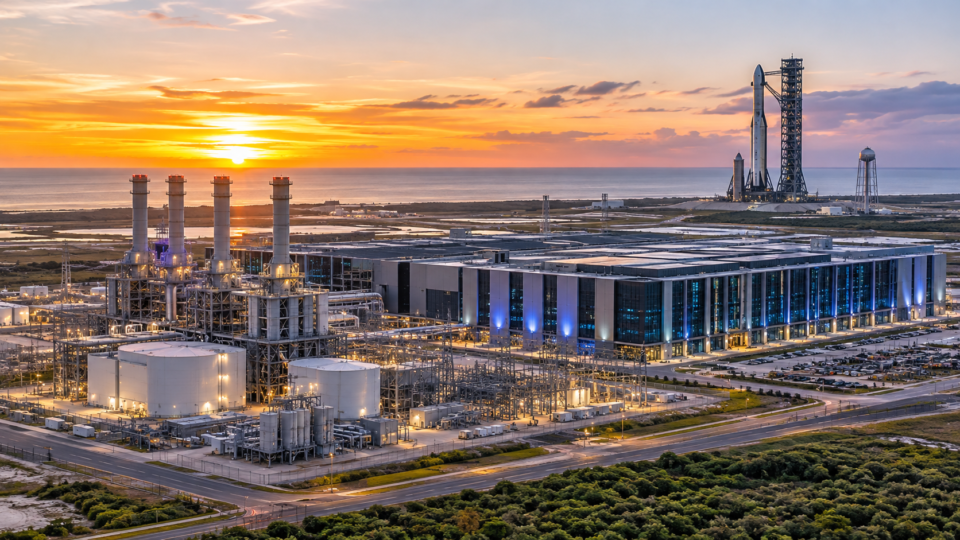
SpaceX is planning a major energy and computing project at its Starbase facility in Texas, proposing a gas-fired power plant and a large-scale supercomputing centre with an estimated initial investment of approximately $24 billion. The development highlights the growing connection between artificial intelligence infrastructure, energy demand and the expansion of the commercial space industry.
According to Reuters, SpaceX has submitted an application seeking tax incentives for the proposed project. The application is expected to be considered by the Starbase City Commission on December 9.
The proposal includes an initial investment of around $24 billion across its first phases. SpaceX could pursue further expansions in the future, although the company has not publicly disclosed the planned electricity-generation capacity or the computing power of the facility.
Why SpaceX Wants Its Own Power Supply
Large-scale artificial intelligence computing facilities require enormous amounts of electricity. As AI models become more advanced and companies expand their computing infrastructure, access to reliable power has become an increasingly important business consideration.
By building and operating its own gas-fired power plant, SpaceX could secure a dedicated energy source for its computing operations. The approach may also reduce its dependence on the existing electricity grid.
Connecting a major data centre to the power grid can involve lengthy approval processes, infrastructure upgrades and construction delays. Developing an independent power facility could help SpaceX avoid some of these challenges and accelerate its plans.
The proposed project therefore represents more than an expansion of physical infrastructure. It could give the company greater control over the energy supply required to operate advanced computing systems.
Starbase Becomes More Than a Space Launch Location
Starbase, located in South Texas, is closely associated with SpaceX’s rocket development and launch operations. The proposed project could broaden the site’s role by adding major energy-generation and artificial intelligence computing infrastructure.
The development also reflects a wider shift in the technology industry. Companies building AI systems increasingly need access to data centres, specialised computing equipment and reliable electricity.
SpaceX’s proposed investment could bring these elements together at a single location, creating an infrastructure base that supports both its existing operations and potential future technology activities.
Natural Gas Infrastructure Also Part of the Plan
The proposal is connected to a wider natural gas infrastructure project. An affiliate of SpaceX, Lone Star Mineral Development, has planned an approximately eight-mile natural gas pipeline known as Starpipe.
The pipeline is intended to begin service in January 2027 and is associated with a planned liquid methane facility.
The combination of natural gas infrastructure, electricity generation and high-performance computing illustrates how energy planning is becoming central to the next stage of technology development.
Growing Competition for AI Infrastructure
SpaceX is also expanding its involvement in the artificial intelligence computing market. Reuters reported that the company rents computing capacity to organisations including Google and Anthropic.
The report also highlighted strong recent business growth, including a significant increase in revenue and substantial growth in AI-related revenue during the third quarter.
The proposed Texas project could strengthen SpaceX’s position in the expanding AI infrastructure market. However, its ultimate impact will depend on regulatory decisions, construction timelines, financing and the company’s ability to deliver the project.
What Happens Next?
The immediate milestone is the Starbase City Commission’s consideration of the tax incentive application on December 9. Further details about the project’s capacity, construction schedule and operating plans will be important in assessing its scale.
If completed, the development could become a significant example of a technology company investing directly in the energy infrastructure needed to support artificial intelligence.
For SpaceX, the proposal signals an ambition that extends beyond rockets and satellite services. It points towards a broader strategy involving energy, computing and advanced technology infrastructure.
