
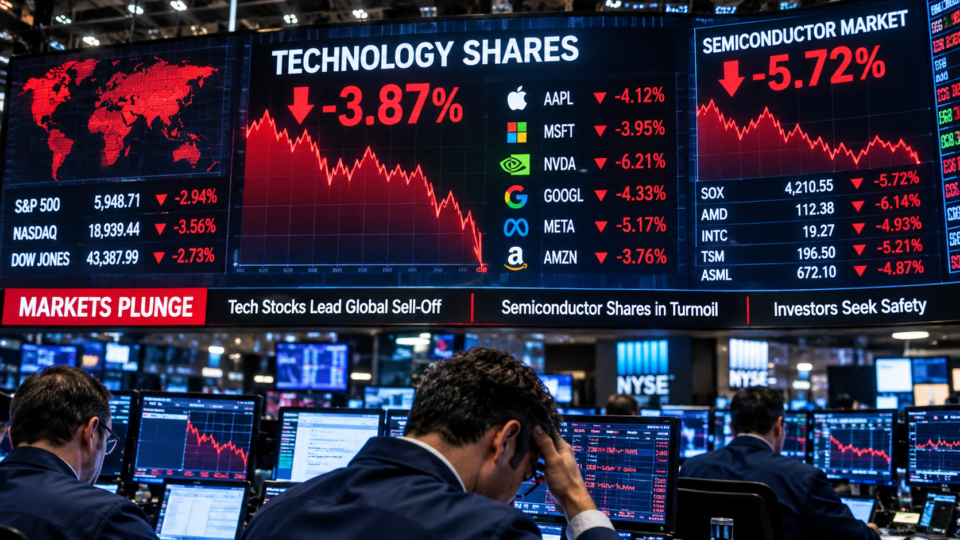
Global Technology Stocks Slide as AI Investment Concerns Grow
Global stock markets came under renewed pressure on Friday, November 20, as investors reduced exposure to technology shares amid concerns about high valuations, borrowing costs and the profitability of large artificial intelligence investments.
The selloff spread across major Asian and US markets. Japan and South Korea’s stock markets fell more than 5%, while Taiwan’s benchmark recorded a weekly decline of approximately 17%, its steepest weekly fall since 1990. In the United States, the Nasdaq Composite declined 2.37%, while semiconductor stocks also suffered significant losses.
AI Optimism Faces a Reality Check
The market reaction followed the high-profile stock market debut of Anthropic, which completed what was described as the largest initial public offering in history. Although its shares initially jumped, the debut did not restore confidence across the wider AI sector.
Investors are increasingly asking whether the enormous capital being committed to AI infrastructure, computing capacity and advanced chips will generate returns quickly enough to justify current valuations.
The concern extends beyond individual AI companies. Semiconductor manufacturers, technology suppliers and businesses linked to data-centre expansion have also become exposed to changing investor expectations.
Investors Move Towards Safer Assets
As equities weakened, demand for government bonds increased. The US 10-year Treasury yield fell below 5% during Friday trading as investors sought relatively safer assets.
The movement reflects a familiar market pattern: when investors become uncertain about growth and corporate earnings, they often reduce riskier investments and increase exposure to government debt.
Why It Matters
Technology companies have played a major role in global market gains. A prolonged correction could affect investment plans, corporate valuations, pension portfolios and funding conditions for startups.
However, a decline in share prices does not necessarily mean that AI adoption is slowing. It may instead indicate that investors are becoming more selective about which companies can turn AI spending into sustainable profits.
What Happens Next
Markets will watch upcoming corporate earnings, technology spending forecasts, interest-rate expectations and evidence of real commercial returns from AI investments. These factors could determine whether the current selloff remains a short-term correction or develops into a broader market adjustment.
