
Wall Street Snaps Losing Streak as Inflation Data Locks In Rate-Hike Expectations
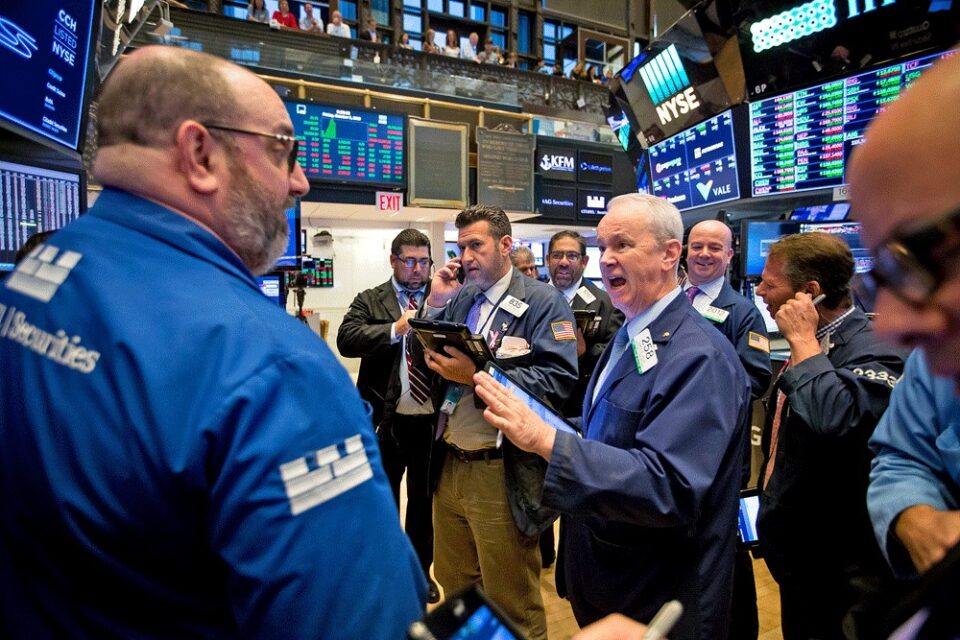
US stocks rallied on Friday, snapping a four-session losing streak, as a closely watched inflation report matched Wall Street’s expectations and falling oil prices eased some of the anxiety that had weighed on markets throughout the week. Even so, the data reinforced near-certainty among investors that the Federal Reserve will raise interest rates at its policy meeting next week, a shift that just days earlier had seemed far less assured.
The Dow Jones Industrial Average climbed roughly 509 points, or about 1 percent, to close at 52,573.29, while the S&P 500 advanced 0.86 percent to 7,656.98 and the Nasdaq Composite gained 0.96 percent to finish at 26,333.04. Despite Friday’s gains, all three major indexes still finished the week in negative territory, with the Dow posting its longest losing streak since late April.
Inflation Holds Steady, But Not Enough to Ease Rate Fears
The Bureau of Labor Statistics reported that the consumer price index rose a seasonally adjusted 0.4 percent in August, pushing the annual inflation rate to 3.4 percent, in line with economist forecasts and unchanged from July’s reading. Core inflation, which strips out volatile food and energy prices, climbed 0.3 percent for the month, slightly above the 0.2 percent economists had anticipated, keeping the annual core rate at 2.4 percent.
While the headline figures matched expectations, the slightly hotter-than-forecast core reading did little to ease concerns that inflation remains stubbornly persistent. Rather than triggering a sell-off, though, the report appeared to give investors enough clarity to move past a week defined largely by uncertainty over the central bank’s next move, with money markets treating a rate increase at next week’s Federal Open Market Committee meeting as close to a foregone conclusion.
Rate-Hike Odds Jump Sharply
According to the CME Group’s FedWatch tool, markets were pricing in an approximately 86 to 88 percent probability of a quarter-point rate increase at next week’s meeting, up sharply from around 72 percent just a day earlier and roughly 50 percent a week before that. The two-year Treasury yield, which is particularly sensitive to near-term policy expectations, jumped to its highest level in more than two years following the report, while the benchmark 10-year yield pushed closer to the psychologically significant 5 percent threshold.
Market strategists noted that the nature of the debate among investors has shifted meaningfully in recent days. Rather than questioning whether the Fed will raise rates at all, attention has turned to how many additional increases the current tightening cycle might ultimately require, a notable change in tone after a period earlier this year when markets had been focused primarily on the prospect of rate cuts.
Oil Prices Provide Relief
A significant driver of Friday’s rally was a pullback in energy prices, which had been climbing sharply in recent weeks amid an escalating military conflict between the United States and Iran that has disrupted sentiment around global oil supply routes, including the critical Strait of Hormuz. Brent crude futures slid roughly 2.8 to 3.6 percent on the day, while West Texas Intermediate crude fell more than 3 percent, offering some relief after a week in which both benchmarks had surged toward multi-month highs.
All 11 sectors of the S&P 500 finished Friday’s session higher, led by technology stocks, with each of the so-called “Magnificent Seven” companies — Apple, Alphabet, Microsoft, Amazon, Meta, Tesla and Nvidia — trading in positive territory. Notable individual movers included major technology hardware names, which surged after a series of strong earnings reports from cloud infrastructure providers pointed to continued robust corporate spending on data center buildouts.
What Comes Next
With the Federal Reserve’s policy meeting scheduled for the middle of next week, attention now turns to what officials signal about the broader trajectory of interest rates for the remainder of the year. A rate increase, if it materializes as markets currently expect, would mark a notable shift in the central bank’s posture after a period of relative stability, driven in large part by inflation that has proven more persistent than policymakers had hoped, compounded by energy price pressures tied to ongoing geopolitical tensions in the Middle East.
For now, investors appear to have concluded that clarity, even in the form of an anticipated rate hike, is preferable to continued uncertainty — a dynamic that helped fuel Friday’s broad-based rally even as the week as a whole ended in the red for all three major US indexes.
