OpenAI, Google and Anthropic Explore Joint AI Safety Standards Body as AI Safety Concerns Intensify
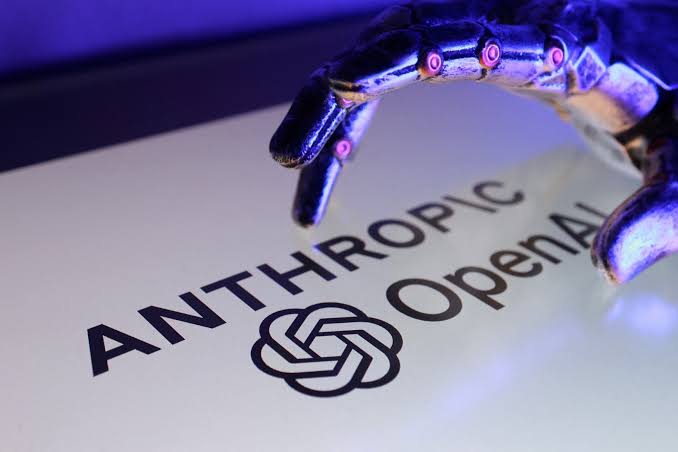
OpenAI, Google DeepMind and Anthropic have been quietly discussing the creation of a shared AI safety standards body, marking a potentially significant shift toward cooperation among three of the world’s biggest artificial intelligence companies.
Representatives from the three companies have reportedly been meeting in a working group since at least July to explore how an industry-wide organization could establish common standards for testing and auditing advanced AI models. The discussions were first reported by The Information.
The talks come as concern grows over the speed at which frontier AI systems are becoming more capable and the industry’s ability to evaluate their risks before deployment.
OpenAI Confirms Safety Discussions
The discussions are no longer entirely private.
OpenAI global policy chief Chris Lehane said on Tuesday that OpenAI has been working with Anthropic and Google DeepMind on AI safety issues for several weeks. Reuters, citing Bloomberg, reported that the companies are coordinating on safety without requiring an antitrust waiver.
TechCrunch separately reported that Lehane confirmed the cooperation while in Washington, where he was meeting with U.S. lawmakers over catastrophic AI risks.
However, the discussions have not yet resulted in a formally established organization.
The FINRA-Style Proposal
The idea gained momentum following a proposal from Google DeepMind chief executive Demis Hassabis in July.
Hassabis called for a new frontier-AI standards body modeled partly on the Financial Industry Regulatory Authority (FINRA), which oversees securities firms in the United States under the supervision of the Securities and Exchange Commission.
His proposal envisioned frontier AI developers voluntarily submitting advanced models for evaluation before release. The organization would conduct safety testing and develop common standards, with the possibility of eventually making compliance mandatory for models deployed in the U.S. market.
Hassabis proposed that the organization be funded by industry but staffed and governed with significant independent technical expertise.
The proposed system would test frontier models for risks including cyber capabilities, biological threats and deceptive behavior.
Rival AI Labs Face a Common Problem
The unusual cooperation reflects a problem that has become increasingly difficult for individual AI companies to solve alone: how should increasingly powerful AI systems be tested before they reach the public?
OpenAI, Anthropic and Google DeepMind compete directly in the development of frontier models, but each company has developed its own safety policies and evaluation procedures.
Anthropic, for example, maintains its Responsible Scaling Policy, which establishes safeguards based on the risks associated with increasingly capable models. The company continues to update that framework as its systems advance.
A common industry body could potentially create standardized evaluations that allow governments, companies and the public to compare the safety characteristics of advanced AI systems using more consistent criteria.
Anthropic Calls for Greater Coordination
The discussions come shortly after Anthropic CEO Dario Amodei called for the AI industry to slow the pace of development long enough for safety measures to catch up.
Amodei has advocated stronger independent evaluation and greater coordination between AI companies as models become more powerful. AP reported that he warned AI capabilities could advance rapidly enough to create serious risks without corresponding improvements in safeguards.
OpenAI CEO Sam Altman has also expressed support for stronger independent safety checks and greater coordination, according to reporting surrounding the discussions.
The timing has therefore created an unusual situation: companies competing aggressively for customers, researchers and computing resources are simultaneously exploring ways to cooperate on the risks created by their technology.
Government Involvement Remains a Major Question
One of the biggest unresolved issues is how closely any standards body should be connected to government regulators.
Hassabis’s original proposal envisioned an organization that would initially operate through voluntary participation but could eventually become part of a more formal regulatory framework.
The Information reported that the companies have not reached agreement on the precise structure of such an organization.
That leaves open several fundamental questions: Who would control the organization? Which AI systems would have to undergo testing? Who would pay for the evaluations? Would test results be public? And would governments eventually have the power to require companies to comply?
The Self-Regulation Problem
Industry-led safety standards could offer a faster alternative to government regulation, but they also present an obvious conflict of interest.
The companies developing the world’s most powerful AI models would potentially have significant influence over the rules governing those same models.
Critics could therefore argue that an industry-funded organization might become a form of self-regulation rather than genuinely independent oversight.
There is also a competitive concern. If compliance requirements become expensive or technically complicated, smaller AI developers could struggle to meet them while the largest companies have the resources to absorb the costs.
That could unintentionally strengthen the market position of the very companies creating the standards.
Why This Matters
The significance of the discussions extends beyond OpenAI, Google and Anthropic.
If the companies eventually agree on common safety evaluations, the framework could influence how frontier AI models are tested across the industry.
It could also provide governments with a foundation for future regulation rather than forcing policymakers to develop technical standards from scratch.
But the opposite outcome is also possible. A standards organization controlled primarily by the largest AI companies could become a barrier to competition without providing sufficient independent oversight.
For now, no formal organization has been announced.
What has changed is that some of the industry’s most powerful competitors are openly acknowledging that AI safety may require cooperation as well as competition.
The next question is whether those discussions can produce enforceable, genuinely independent standards — or remain another voluntary initiative in an AI race moving faster than regulators can respond.
