
Trump and Xi Summit: How Long Will the US-China Trade Truce Last?
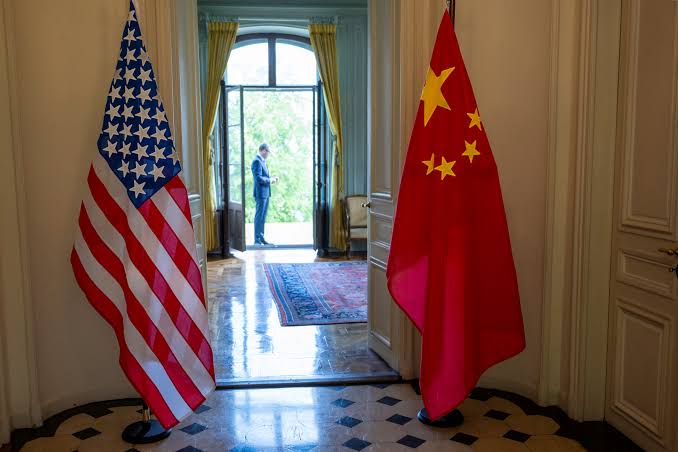
President Donald Trump will host Chinese President Xi Jinping at the White House on Thursday.
The summit will focus on one key question: How long can the fragile US-China trade truce last?
This will be the leaders’ second meeting this year. Their first meeting followed Trump’s trip to Beijing in May, according to The National.
The summit also comes with a deadline.
The trade ceasefire agreed in Busan, South Korea, on October 30, 2025, expires on November 10. Investors, importers and governments around the world are watching for signs that the agreement will be extended.
The truce clock
Under the Busan agreement, Washington paused its so-called Affiliates Rule. Beijing, meanwhile, agreed to continue exporting rare earths and other critical minerals, according to Euronews.
CNBC reported that the United States also agreed to keep tariffs on Chinese goods at around 20%.
Both countries want more time. However, they have different goals.
Scott Kennedy of the Center for Strategic and International Studies told Euronews that Beijing wants an extension through the end of the Trump administration.
Washington, however, wants an extension of only a few months. This would allow the US to maintain pressure and keep its negotiating leverage.
Kennedy expects the two sides could settle on a compromise of about one year.
Minerals and a stalled tariff cut
Critical minerals are already a major source of tension.
A senior US official told reporters on Friday that China’s shipments of critical minerals have fallen short of its commitments, according to CNBC.
The issue is expected to feature prominently in the summit.
Earlier discussions between US Treasury Secretary Scott Bessent and Chinese Vice Premier He Lifeng also focused on the supply of rare-earth magnets.
Tariffs are another major issue.
After the May summit, both sides discussed a possible tariff reduction covering about $30 billion worth of goods. However, the plan was never implemented, Reuters reported.
Bloomberg said energy tariffs could also be included in the package.
Such a move could allow Chinese purchases of American liquefied natural gas to resume.
US Trade Representative Jamieson Greer has also said the two countries would announce measures involving agriculture and non-tariff barriers.
Artificial intelligence joins the talks
Artificial intelligence is adding a new dimension to the US-China relationship.
During talks at JPMorgan’s headquarters in New York, Bessent proposed a system for the two governments to share information about AI developments and incidents.
The discussions also covered AI-related security breaches.
US officials have also accused Chinese companies of copying advanced American AI models on a large scale without permission.
Expectations for a major AI agreement remain low.
Analysts quoted by CNBC see little chance of a deal that would limit the development of advanced AI models.
However, some experts hope the two countries can improve communication on AI safety and security.
The Trump administration has opposed new AI regulations. It argues that tighter rules could slow US development and give China an advantage.
The guest list for Thursday’s state dinner also highlights the importance of technology.
Executives expected to attend include Amazon’s Jeff Bezos, Alphabet’s Sundar Pichai, OpenAI’s Sam Altman, Apple’s Tim Cook, Tesla’s Elon Musk and Nvidia’s Jensen Huang, according to The National.
Taiwan and Iran remain in the background
Trade and technology will not be the only issues on the agenda.
Taiwan is another major point of tension.
A $14 billion US arms package for Taiwan is awaiting final approval. Xi is expected to ask Trump to drop the package.
The war with Iran could also feature in the discussions.
One analyst at the Centre for European Policy Analysis described the summit as a meeting focused on “Taiwan, technology, and trade,” according to The National.
Low expectations, high stakes
Most analysts do not expect a dramatic breakthrough.
Anna Ashton, founder of Ashton Intelligence, told CNBC that she expects the leaders to announce some concrete measures because this is a presidential summit.
However, she does not expect a major breakthrough.
The Peterson Institute for International Economics has also described the situation as an uncomfortable truce. It expects the Busan agreement is more likely than not to be extended.
Markets have already started pricing in a calmer outcome.
US stocks rallied on Monday. Lower oil prices helped support the move. Traders also see the Trump-Xi summit as one of the week’s main market events.
For businesses, the outcome could be important.Companies that rely on Chinese components need clarity about tariffs and export controls.The same applies to US companies that sell products in China.A clear extension of the truce would give businesses more time to plan for the final months of the year.A short extension could keep uncertainty high.A vague agreement could create similar problems.The two leaders are expected to continue their discussions on Friday.
