
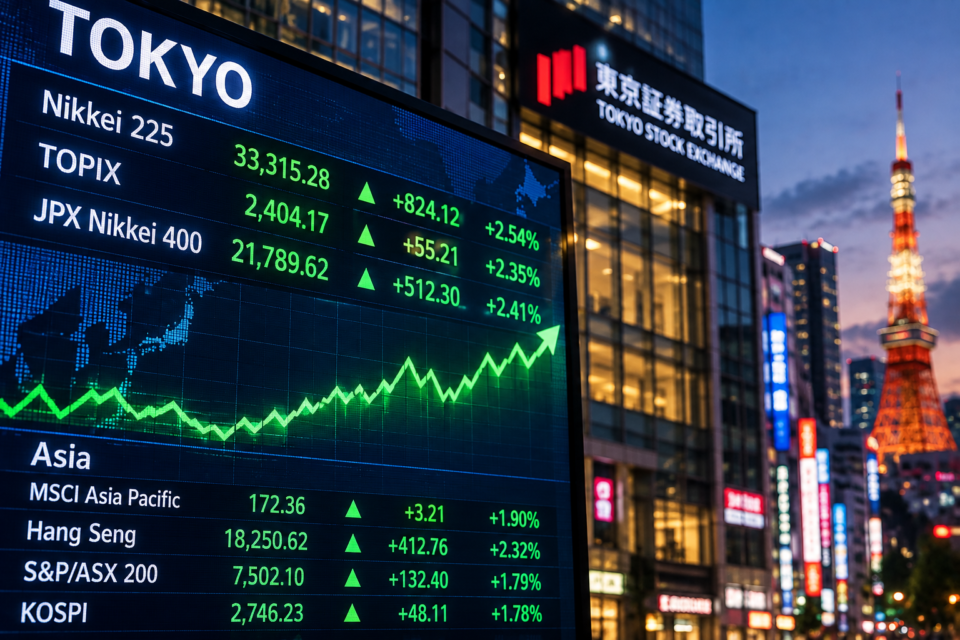
Asian stocks rallied on Monday, October 5, after a weak US jobs report reduced expectations for another Federal Reserve interest-rate hike this month. Japan’s Nikkei 225 led the gains, closing 2.4% higher at 69,946.86 as technology shares advanced, according to CNBC.
Trading was thin. Markets in mainland China and South Korea were closed for public holidays, leaving investors to take their cue from Wall Street’s rally on Friday.
What Happened
The rebound followed a bruising week. The US economy added just 29,000 jobs in September, far fewer than economists expected, and the unemployment rate rose to 4.2%. Wage growth also slowed. Stock futures jumped and Treasury yields dropped when the data was released on Friday, and Wall Street closed higher.
Asia picked up that momentum when trading resumed. Australia’s S&P/ASX 200 finished flat at 8,686.40, while Hong Kong’s Hang Seng hovered close to flat after opening at 23,963. Investing.com reported that the MSCI Asia Pacific index gained about 1.1% during the session.
Money markets now price in less than a 25% chance of a Fed hike this month, easing pressure on bonds after months of concern about persistent inflation.
Why Asian Stocks Matter for Global Markets
Asian equities have been a barometer for global risk appetite during the recent bond sell-off. Higher borrowing costs weigh on company valuations, particularly in the technology sector, which dominates indexes in Japan, South Korea and Taiwan.
When yields rise, growth stocks tend to suffer. When they ease, those same shares often lead the recovery. Monday’s technology-led jump in Tokyo fits that pattern.
Europe offered a similar story. The STOXX 600 had touched three-month lows last week before Monday’s bounce, and investors there pointed to escalating tensions in the Middle East as a risk that could cap further gains. Separately, data from Tokyo last week showed core consumer prices up 2.7% from a year earlier, a reminder that inflation pressure is not confined to the United States.
Oil helped, too. Market reports said a recovery in Middle East crude flows and the G7’s decision to release emergency stocks improved sentiment by easing worries about an energy-driven inflation spike.
Key Details
- Nikkei 225: closed up 2.4% at 69,946.86.
- ASX 200: ended flat at 8,686.40.
- Hang Seng: opened at 23,963, essentially unchanged, after hitting its lowest level since July last week.
- Holidays: mainland China and South Korea were closed.
- Europe: the pan-European STOXX 600 rose about 0.4% to 0.5% in early trading, with London’s FTSE 100 up roughly 0.5% to 0.7%. The gains snapped a three-week losing streak, according to Investing.com.
- Fed odds: less than a 25% chance of an October hike, according to money-market pricing cited by Investing.com.
Broader Context: A Fragile Relief Rally
The rally comes after a punishing stretch for global markets. A bond sell-off drove the US 10-year Treasury yield to its highest level since 2002 last Thursday, and Hong Kong’s Hang Seng slid to an 11-week low on Friday.
Hong Kong has been the weakest major market recently. Its Hang Seng TECH sub-index fell about 2.5% on Friday as technology shares came under pressure. Thin holiday trading can also exaggerate price moves, so a single session says little about the trend.
Analysts say the drivers of that sell-off have not gone away. Investing.com attributed it to inflation concerns, rising government spending and heavier corporate borrowing to fund artificial-intelligence infrastructure. Yields across major economies remain near multi-year highs, according to RTHK.
That is why many strategists describe the move as a pause rather than a reversal. The Fed raised rates in September for the first time in three years. Several economists still expect one more increase by December, even if October now looks unlikely.
What Happens Next
Investors face a busy week. Minutes from the Fed’s September meeting are expected, and traders will parse them for clues on the pace of tightening. In Europe, euro-zone purchasing managers’ indexes and comments from European Central Bank officials are in focus.
On the US data calendar, market calendars list the trade balance on Tuesday, weekly jobless claims on Thursday and preliminary University of Michigan consumer sentiment on Friday. Oil prices and any new Gulf shipping incidents add geopolitical risk. A hotter-than-expected inflation or wage reading could quickly revive rate-hike bets, so volatility may return.
