
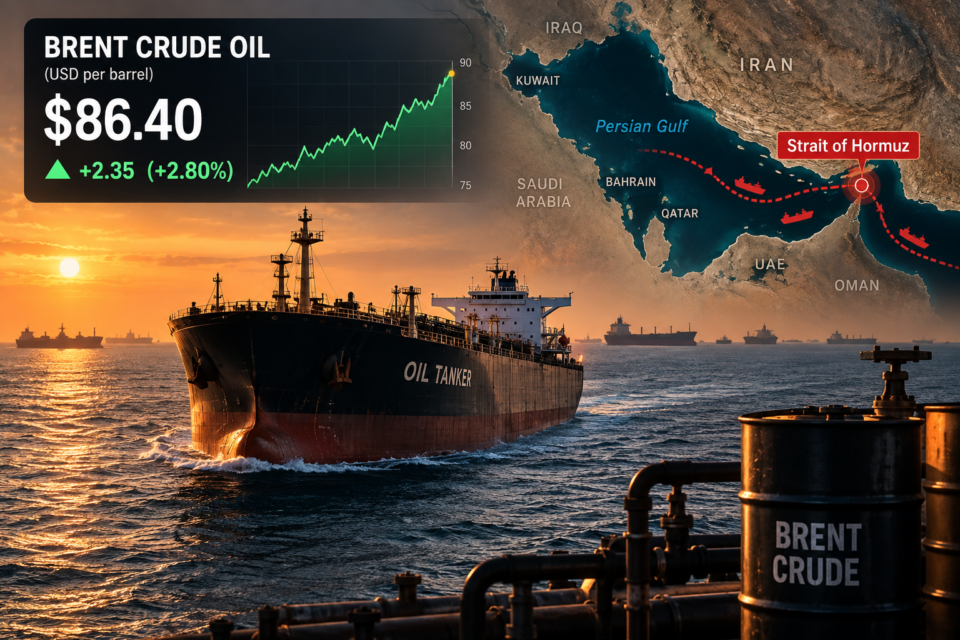
The Brent crude oil price rose toward 1.14, or 1.11%, to 89.72.
What Happened to the Brent Crude Oil Price
Oil climbed after Trump rejected an Axios report. The report, citing US officials, said he was willing to offer Iran sanctions relief and release frozen funds in return for concrete steps on its nuclear programme. Trump posted on Truth Social that the claim was untrue and that he had offered Iran “NOTHING.”
Qatar said on Tuesday it hopes shuttle diplomacy between Tehran and Washington can produce a breakthrough. Its foreign ministry spokesperson, Majed al-Ansari, said messages were being exchanged to build common ground.
Markets have swung on each headline. Brent topped 103 on Tuesday as exports recovered.
Brent is heading for a monthly gain of about 14%, its biggest since July, Reuters reported. WTI is on track for a 4% rise.
Why It Matters
The Strait of Hormuz normally carries about a fifth of the world’s oil. Any disruption there ripples through fuel prices, shipping costs and inflation.
The link to inflation is already visible. US consumer prices rose 3.4% in August from a year earlier. Gasoline rose 3.9% on the month and accounted for about a third of the monthly increase, according to CNN’s report on the Labor Department data. Higher inflation has pushed the Federal Reserve toward rate hikes, and long-term Treasury yields have reached their highest levels in decades.
Key Details
- Brent: $103.73 a barrel, up 1.11%
- WTI: $89.72 a barrel, up 34 cents
- Middle East exports:328 million barrels per day in September, the highest since the war began in late February, according to Reuters
- Saudi Arabia: resumed tanker loadings at Yanbu on Tuesday after restarting its East-West Pipeline
- US inventories: American Petroleum Institute data showed crude stocks up 1.02 million barrels in the week to September 25, according to market sources
- Diesel: the Brent-WTI spread has widened to its largest in four months as the US weighs restricting diesel exports
Broader Context
Diplomacy has swung back and forth. Trump rejected an Iranian proposal at the weekend, Al Jazeera reported. Under it, the US would have released frozen funds, lifted sanctions and ended its naval blockade of Iranian ports. Iran would then have reopened the strait and returned to nuclear talks within a week.
The scale of the shock is clear when set against pre-war levels. Brent averaged roughly 67 a barrel in January, Gulf News reported. It has since climbed above $100 during a conflict that began in late February and sharply disrupted traffic through the strait.
Supply has partly recovered even so. Kpler data cited by CNBC showed seven-day average oil exports through Hormuz at 13.2 million barrels per day last week, compared with about 17 million before the war. Saudi Arabia’s shipments through the Red Sea have also helped, though Houthi attacks on the kingdom remain a risk.
Energy analyst Saul Kavonic of MST Marquee said prices eased on evidence of recovering Hormuz flows and hopes of avoiding a US diesel export ban. He added that the situation remains volatile and oil logistics are costly and constrained.
Domestic politics is a factor as well. Trump is considering allowing sales of red-dyed diesel instead of an export ban, Reuters reported. The aim would be to offer consumers price relief before November’s midterm elections.
What Happens Next
Traders will watch official US inventory data from the Energy Information Administration, due at 10:30 a.m. Eastern time on Wednesday. Analysts polled by Reuters expect crude and product stocks to have fallen.
The bigger driver remains diplomacy. Qatar’s shuttle effort continues, but Trump’s denial suggests the two sides remain far apart. Goldman Sachs said earlier this month that Brent above $120 is plausible if attacks on tankers and infrastructure intensify.
Any confirmed reopening plan for Hormuz could pull prices lower. A collapse in talks would do the opposite.
