
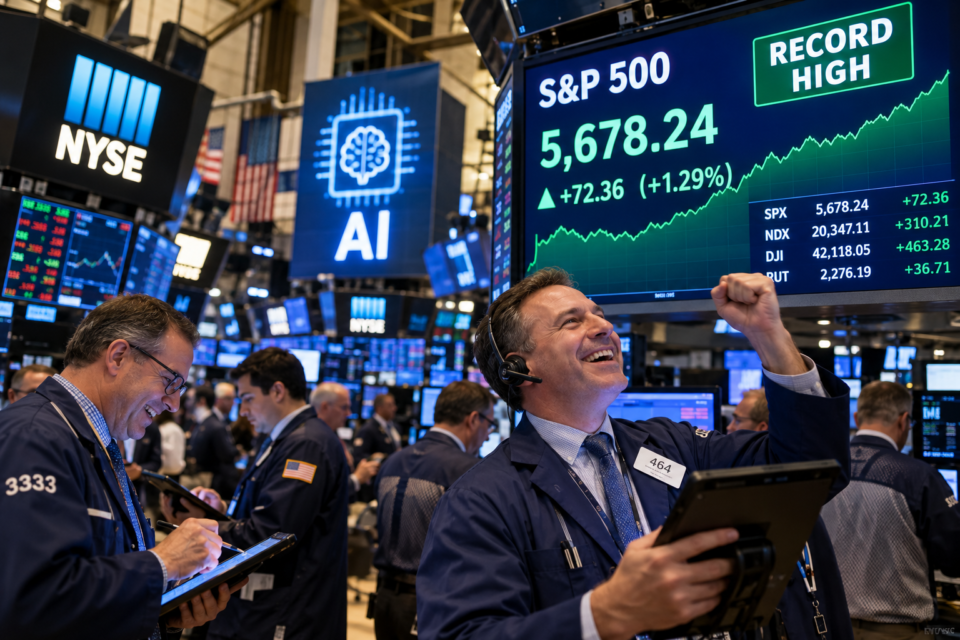
Wall Street’s S&P 500 record high arrived on Tuesday, Oct. 6, 2026, as an artificial intelligence rally pushed U.S. stocks to fresh peaks and set the tone for Asian trading on Wednesday. The index rose 0.58% to close at 7,818.93, while the Dow Jones Industrial Average gained 0.49% to 51,521.28, according to TheStreet’s market wrap. The Nasdaq Composite also finished higher after starting the week with an all-time closing high.
The milestone came days before the U.S. earnings season begins and despite elevated oil prices and bond yields that continue to worry investors, Bloomberg reported.
What Drove the S&P 500 Record High
Technology led the advance. Nvidia and AMD both hit all-time highs, and Nvidia’s market value moved toward $6 trillion, according to Bloomberg. AMD rose about 2.8%, Yahoo Finance reported.
Energy news added to the mood. Constellation Energy and Alphabet announced a 20-year nuclear power agreement, and optimism around the deal supported mega-cap technology shares. Constellation stock surged as much as 15% during the session.
The S&P 500 touched a record within minutes of the open, Yahoo Finance reported, and held its gains through the close. The day before, the index had climbed 0.7%, with materials, communication services and energy shares leading, according to NYSE market commentary.
Falling oil prices and easing Treasury yields also helped. Crude slid early on Tuesday on rising Gulf exports and a release of European diesel, according to Schwab. U.S. benchmark crude traded near $87 a barrel at the open.
Volatility stayed contained. The Cboe Volatility Index, a gauge of expected market swings, was around 15 at the open.
The advance was broad. Market commentary from the New York Stock Exchange said breadth had been improving, and the equal-weight S&P 500 rose by a similar amount to the main index. Small caps lagged, as they tend to be more sensitive to higher borrowing costs.
Why It Matters
Yahoo Finance said it was the first record close for the S&P 500 since August. Records on both the S&P 500 and the Nasdaq show that investors still favour companies tied to AI spending, even as interest rates climb.
The rally also gives corporate America a strong backdrop for the earnings season that starts next week. Investors will look for evidence in those reports that AI spending is turning into revenue, and for signs of how higher financing costs are affecting margins.
Trading Economics data showed the index up roughly 16% over the past year. That strength has been concentrated in a handful of large technology names. When a few stocks carry much of the market’s gains, the indexes can become sensitive to those companies’ earnings and outlooks.
Key Details
- S&P 500: closed at a record 7,818.93, up 0.58%
- Dow Jones Industrial Average: closed at 51,521.28, up 0.49%
- Nasdaq Composite: rose roughly 0.5% to another record close
- Leaders: Nvidia and AMD at all-time highs
- Oil:S. crude near $87 a barrel at Tuesday’s open, down more than 2%
- Treasury yield: the 10-year note near 5.28% early on Tuesday
Broader Context
The rally is unfolding against a tougher rate backdrop. The U.S. Federal Reserve raised interest rates in September for the first time since 2023, lifting its target range to 3.75%–4%. The European Central Bank and the Bank of Japan have also raised rates this year.
The 10-year Treasury yield has climbed above 5% and touched its highest level since 2002 this week. Schwab noted that yields rose on Monday even as oil fell, suggesting the link between crude and bond yields has loosened. Bloomberg said elevated oil prices could still keep rates and global bond yields higher for longer.
Higher yields compete with stocks for investors’ money, because safer bonds pay more. That is why the combination of record equity prices and multi-decade highs in bond yields stands out.
Together, those forces make the equity record notable. Stocks are rising while borrowing costs sit at multi-decade highs.
What Happens Next
Futures on the S&P 500 and the Nasdaq 100 pointed to further gains ahead of Wednesday’s session, Bloomberg reported. Investors now turn to the minutes of the Fed’s September meeting, due Wednesday, and to the start of the U.S. earnings season next week.
The Fed’s next policy meeting is scheduled for Oct. 27–28. Whether the AI-driven rally can hold will depend on corporate earnings and on how bond yields and oil behave in the days ahead.
