
Wall Street Braces for a Fed Reversal: Rate Hike Expected for First Time in Three Years
For much of this year, investors assumed the Federal Reserve’s next move would be a cut. Instead, the central bank is now widely expected to raise interest rates on Wednesday — its first hike since 2023 — as a sharp rise in energy prices threatens to reignite inflation just as policymakers thought they had it under control.
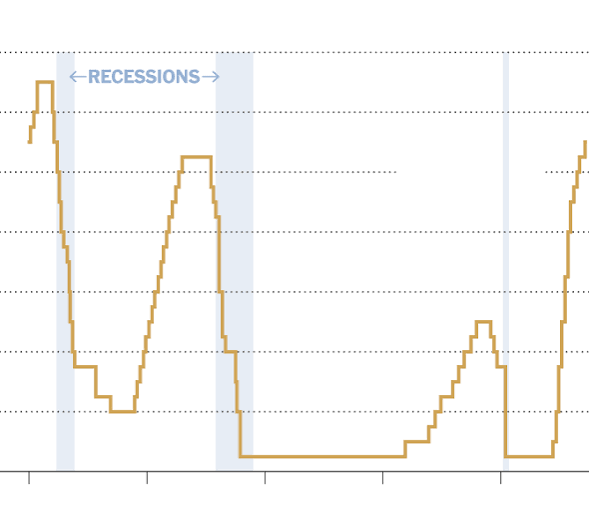
The Federal Open Market Committee’s two-day meeting concludes Wednesday, with Chair Kevin Warsh set to announce the decision at 2 p.m. Eastern time, followed by a press conference at 2:30 p.m. The federal funds rate has held steady at 3.50%–3.75% since December, but futures markets are now pricing in a real probability that policymakers will nudge it higher this week, with some traders anticipating two separate quarter-point increases before the year is out.
From Rate-Cut Hopes to Hike Pricing
The turnaround has been swift. Earlier in the year, several Wall Street strategists expected the Fed to deliver one or two rate cuts by year-end, citing a cooling labor market and easing price pressures. That narrative unraveled as energy costs climbed sharply, driven largely by escalating tensions between the United States and Iran and, more recently, the shutdown of Saudi Arabia’s critical East-West oil pipeline.
August’s consumer price index data proved to be a turning point. Headline inflation came in largely as expected, but core inflation — which strips out volatile food and energy costs — landed hotter than forecast, lifting the market-implied probability of a September hike to roughly 90%, according to traders tracking futures pricing. That marks an extraordinary shift from earlier in the summer, when a hike was considered a distant, low-probability outcome.
Why This Meeting Carries Extra Weight
Wednesday’s decision is one of four meetings each year accompanied by the Fed’s Summary of Economic Projections — the closely watched “dot plot” that shows where individual policymakers expect rates to land over the coming years. That makes this meeting particularly consequential: rather than just confirming a single rate move, it will offer markets a fuller picture of how the central bank views the inflation trajectory heading into 2027.
The Fed’s most recent projections, released in June, suggested the federal funds rate would rise to roughly 3.8% by year-end — consistent with a single quarter-point increase. But that forecast predates the recent surge in oil prices, and analysts widely expect the updated dot plot to reflect a more hawkish stance, potentially signaling further tightening if energy costs remain elevated.
Chair Warsh, who has pledged to offer less “forward guidance” than his predecessors, is expected to face pointed questions at his press conference about how the central bank plans to balance a still-resilient labor market against the risk of imported inflation from energy markets. Investors will be parsing his language carefully for hints about the pace of any further increases.
A Delicate Balancing Act
The Fed’s dilemma is a familiar one dressed in unfamiliar clothes. Inflation driven by an external energy shock — rather than domestic demand — is notoriously difficult for central banks to manage. Raising rates does little to bring down the price of a barrel of Saudi crude, but it can help anchor longer-term inflation expectations and prevent a wage-price spiral from taking hold if elevated energy costs persist.
At the same time, tighter monetary policy risks weighing on an economy that, by most measures, remains fundamentally sound. The labor market has held up reasonably well, but higher borrowing costs could slow business investment and consumer spending just as households are already absorbing the pain of pricier gasoline and diesel.
Treasury yields have already begun reflecting this recalibration, with the 10-year yield pushing past the 5% mark in recent sessions — a level that raises borrowing costs across mortgages, auto loans and corporate debt. Equity markets, meanwhile, have turned cautious, with the S&P 500 retreating and volatility gauges climbing as investors price in a less accommodative Fed than they expected just months ago.
What Comes Next
Markets will also be watching for any commentary on the Bank of England’s own rate decision, expected just a day later on Thursday, as the two central banks navigate similar inflationary pressures from the same global energy shock. A stronger dollar following a Fed hike could complicate that calculus for policymakers in London and beyond.
For now, the consensus on Wall Street has shifted decisively: barring a dramatic de-escalation in the Middle East or a surprise cooling in inflation data, the Fed appears poised to raise rates Wednesday, marking a notable pivot after nearly three years without a hike and underscoring just how disruptive the current energy crisis has become for the broader economy.
