
Global Oil Markets Rattled as Saudi Arabia’s Lifeline Pipeline Goes Dark
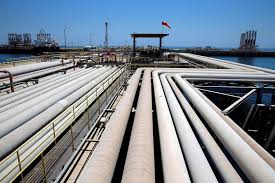
Global energy markets are bracing for a prolonged supply shock after Saudi Arabia shut down its East-West Pipeline, the kingdom’s crucial overland route that allows crude to bypass the increasingly dangerous Strait of Hormuz. The closure, triggered by a drone attack last week, has sent oil prices surging to levels not seen since May, with ripple effects already reaching gas pumps and financial markets worldwide.
Brent crude, the international benchmark, climbed as high as 105.68, a jump of roughly 9% over the past week alone. U.S. West Texas Intermediate futures followed a similar trajectory, brushing close to $105 before easing slightly. For a market that was already running tight, the timing could hardly be worse.
Why the Pipeline Matters So Much
The East-West Pipeline isn’t just another piece of energy infrastructure — it’s a strategic insurance policy. Stretching roughly 750 miles across the width of Saudi Arabia, the line allows the kingdom to move crude from its Gulf-side production fields directly to Red Sea export terminals, sidestepping the Strait of Hormuz entirely. That matters enormously right now, because vessel traffic through the strait — which normally carries about a fifth of the world’s oil — has slowed to barely a trickle amid the ongoing standoff between the United States and Iran.
With the pipeline offline, Saudi Arabia has effectively lost its safety valve. The line, which can move up to 7 million barrels per day following recent capacity expansions, was damaged after drones launched from Iraq struck a pumping station, according to officials familiar with the incident. Satellite imagery reviewed by analysts showed extensive fire damage and blackened structures at the site, though Saudi authorities have not publicly detailed how long repairs will take.
Estimates vary widely. Some industry analysts believe the kingdom could restore partial flow within days if damage is limited to surface infrastructure. Others, citing the scale of destruction visible in satellite photos, say a full repair could take three to five weeks — or even longer if a major pump station requires rebuilding rather than patching.
A Ticking Clock on Storage
The immediate concern isn’t the pipeline itself so much as what happens when Saudi Arabia’s storage buffer runs dry. The kingdom has been drawing down reserves at its Red Sea port of Yanbu to keep exports flowing, but commodity analysts estimate that cushion could be exhausted within five to seven days if the pipeline remains shut. Should that happen, roughly 120 million barrels of supply could effectively vanish from the market over the following month — a loss equivalent to nearly 4% of daily global output.
That kind of disruption, layered on top of an already strained Strait of Hormuz, is precisely what has traders on edge. Global oil inventories have already fallen by roughly a billion barrels in recent months, leaving the market with far less room to absorb additional shocks than it had even a year ago.
“The longer the shutdown, the higher the price,” one energy analyst noted, adding that the severity of the damage visible in early assessments suggested repairs could stretch into months rather than weeks. Every additional day without a fix pushes more oil toward the bottleneck at Hormuz, compounding the risk of further price spikes if hostilities in the region escalate.
Diplomacy Stalls as Tensions Rise
Efforts to defuse the broader regional standoff suffered a setback over the weekend. A planned diplomatic meeting between Iran and Gulf Arab states, scheduled to take place in the Omani city of Salalah, was postponed at the request of regional governments just as the pipeline attack unfolded. Oman’s foreign minister said the delay was made “in the interests of consensus” and stressed a continued commitment to dialogue, but the postponement adds uncertainty to an already fragile security picture.
That picture darkened further over the weekend when another tanker came under attack, resulting in a severe onboard fire, according to maritime security monitors tracking shipping traffic in the strait. The incident reinforced fears that the current lull in hostilities is more fragile than markets had hoped.
What It Means for Consumers
The knock-on effects are already visible well beyond trading floors. Average U.S. gasoline prices have climbed roughly $1.30 a gallon above pre-conflict levels, and diesel prices have pushed to record highs, squeezing freight costs across supply chains. Treasury yields have also risen in tandem with oil prices, as investors recalibrate inflation expectations just as the Federal Reserve prepares for a pivotal policy decision this week.
Analysts caution that prices are unlikely to retreat meaningfully below the $100 mark in the near term. With Saudi Arabia scrambling to restore the pipeline and diplomatic channels stalled, the market is left pricing in a scenario where supply losses could deepen before they improve. For now, all eyes remain on Riyadh — and on whether repair crews can beat the clock before storage runs out.
